
Most Wikipedia pages are rejected because they fail to meet Wikipedia’s standards for notability, reliable sourcing, neutrality, and verifiability. Understanding these requirements before submitting a page can significantly improve the chances of approval.
Why Do Wikipedia Pages Get Rejected?
Many individuals, businesses, authors, and public figures assume that having a website, social media presence, or successful career automatically qualifies them for a Wikipedia page. However, Wikipedia has strict editorial guidelines designed to ensure that only notable and verifiable topics are included.
The majority of rejected submissions fail because they do not comply with key Wikipedia policies such as Wikipedia Notability Guidelines, Verifiability, Reliable Sources, and Neutral Point of View (NPOV).
Understanding these requirements is essential before starting the Wikipedia page creation process.
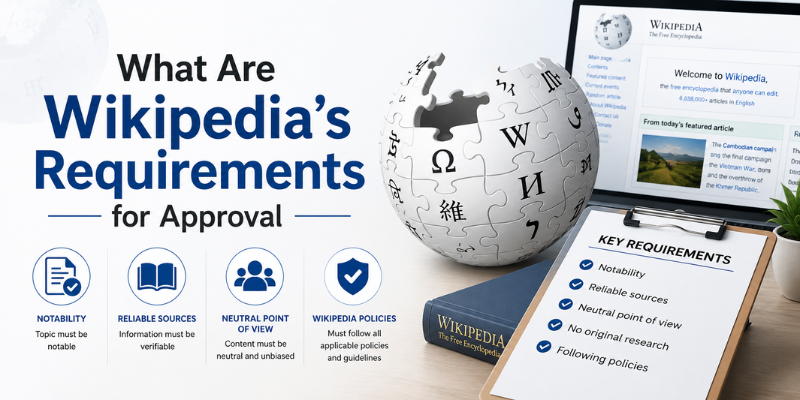
What Are Wikipedia’s Requirements for Approval?
Before approving a new article, Wikipedia editors evaluate whether the subject meets several criteria:
Wikipedia Notability Guidelines
The most common reason for rejection is failing Wikipedia’s notability requirements.
A subject must have received significant coverage in independent, reliable secondary sources. Wikipedia does not consider:
- Personal websites
- Company websites
- Press releases
- Social media profiles
- Self-published content
as evidence of notability.
Instead, editors look for:
- Major news publications
- Independent magazine features
- Industry publications
- Books from reputable publishers
- Academic journals
Without sufficient independent coverage, the article will likely be declined.
Reliable Sources and Verifiability Requirements
Wikipedia requires every important claim to be supported by reliable sources.
Accepted Reliable Sources
- National newspapers
- Established magazines
- Academic publications
- Reputable industry journals
- Independent media outlets
Sources Often Rejected
- Press releases
- Company blogs
- Personal websites
- LinkedIn profiles
- Promotional articles
- User-generated content
If editors cannot verify information through trusted sources, the article may be rejected or deleted.
Common Reasons Wikipedia Pages Get Rejected
Lack of Independent Media Coverage
Many submissions cite sources created by the subject themselves.
Wikipedia requires third-party coverage from independent publications. If most references come from the subject’s own website or marketing materials, editors will likely reject the page.
Example
An author may have published several books and maintain an active website, but without coverage from independent media outlets, Wikipedia may determine that notability has not been established.
Promotional or Marketing Language
Wikipedia is not a platform for advertising.
Articles containing phrases such as:
- Leading company
- Award-winning brand
- Industry pioneer
- Best-selling expert
- Top-rated professional
often trigger editor concerns.
Wikipedia content must be written from a neutral perspective.
Poor Example
“Arkham House Company is a leading and innovative provider of business solutions.”
Better Example
“Arkham House Company is a business solutions provider founded in 1939.”
Neutral language improves approval chances significantly.
Violation of Wikipedia’s Neutral Point of View Policy
The Neutral Point of View (NPOV) policy requires balanced coverage.
Editors may reject articles that:
- Overemphasize achievements
- Ignore criticism or controversy
- Read like biographies written by fans
- Present opinions as facts
A Wikipedia article should describe the subject objectively rather than persuade readers.
Conflict of Interest (COI) Issues
A conflict of interest occurs when someone closely connected to the subject writes the article.
Examples include:
- Company employees
- Business owners
- Public relations agencies
- Family members
- Personal representatives
While COI editing is not automatically prohibited, undisclosed promotional editing often attracts scrutiny and rejection.
Insufficient Citations
Even notable subjects can face rejection when articles lack proper citations.
Editors expect:
- Inline references
- Verifiable statements
- Consistent sourcing throughout the article
Unreferenced content may be removed or challenged during review.
Copyright Violations
Wikipedia has strict copyright policies.
Common mistakes include copying content from:
- Company websites
- Author biographies
- Press kits
- Marketing materials
- Published articles
Even if you own the content elsewhere, copying and pasting into Wikipedia can result in rejection.
All content should be written originally for Wikipedia.
Poor Article Structure
Wikipedia articles follow an encyclopedia format.
A well-structured article typically includes:
→ Introduction
Brief overview of the subject.
→ Background or History
Relevant historical information.
→ Career or Activities
Major milestones and achievements.
→ Recognition
Awards, notable coverage, or significant contributions.
→ References
Reliable independent sources.
Poor formatting or incomplete sections can negatively affect the review process.
Failure to Meet Articles for Creation (AfC) Standards
Many new pages are submitted through Wikipedia’s Articles for Creation (AfC) process.
AfC reviewers assess:
- Notability
- Source quality
- Neutrality
- Formatting
- Compliance with Wikipedia policies
A draft may be declined multiple times until deficiencies are addressed.
How Wikipedia Editors Evaluate New Submissions
Wikipedia editors typically ask:
- Is the subject notable?
- Are reliable independent sources provided?
- Is the article neutral?
- Are claims verifiable?
- Does the content follow Wikipedia formatting standards?
- Does the article appear promotional?
If the answer to any of these questions is negative, approval becomes less likely.
How to Improve Your Chances of Wikipedia Page Approval
Conduct a Notability Assessment First
Before drafting an article, determine whether sufficient independent coverage exists.
A notability assessment can identify potential weaknesses before submission.
Gather High-Quality Sources
Prioritize:
- Newspaper articles
- Magazine features
- Industry publications
- Academic references
The stronger the sources, the stronger the article.
Write in a Neutral Tone
Avoid:
- Sales language
- Marketing claims
- Subjective opinions
Focus on verifiable facts supported by reliable sources.
Follow Wikipedia Formatting Standards
Use:
- Proper headings
- Inline citations
- Neutral structure
- Encyclopedic language
Well-formatted articles are easier for reviewers to evaluate.
Conclusion
Most Wikipedia pages are rejected because they fail to meet the platform’s standards for notability, reliable sourcing, neutrality, and verifiability. By understanding the Wikipedia Notability Guidelines, using independent sources, avoiding promotional language, and following Wikipedia’s editorial policies, individuals and organizations can substantially improve their chances of successful publication.