
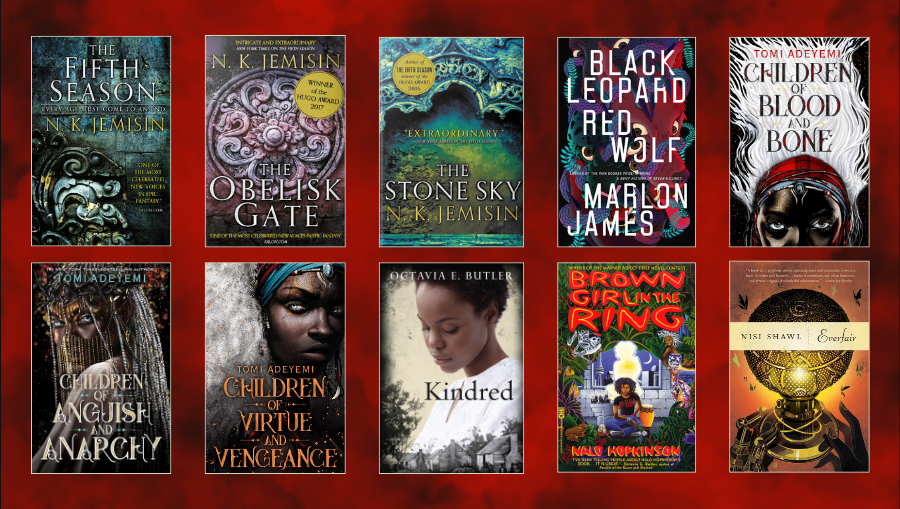
The fantasy genre is changing in powerful and necessary ways. For decades, mainstream fantasy was often built around European castles, medieval kingdoms, Celtic legends, and familiar hero’s journey structures. Those stories still have a place, but today’s readers are looking for wider worlds, deeper cultural roots, and fresher mythologies. That is one reason black fantasy authors have become some of the most important voices in modern speculative fiction.
From African-inspired epic fantasy to Caribbean folklore, Afrofuturism, dark fantasy, magical realism, and historical fantasy, Black writers are expanding what fantasy can look like. Their books are not only entertaining; they also explore identity, power, ancestry, trauma, survival, resistance, spirituality, and imagination. For readers searching for fantasy books by black authors, this is one of the richest periods in the history of the genre.
We value stories that move beyond the ordinary and enter strange, bold, and unforgettable worlds. Black fantasy belongs at the center of that conversation. Whether you are new to the genre or already looking for adult fantasy books by black authors, this guide will introduce you to essential names, major works, rising voices, dark fantasy innovators, and hidden gems worth adding to your reading list.
What Makes Black Fantasy Authors So Important Today?
Black fantasy authors are not simply adding diversity to an existing genre. They are actively reshaping the genre’s foundations. Their work brings new myth systems, new political realities, new family structures, and new ideas of magic into fantasy literature. Instead of repeating the same kingdoms, chosen ones, and magical bloodlines, many Black authors ask bigger questions: Who gets to inherit power? What does freedom cost? How does history haunt the present? What happens when magic is tied to memory, land, oppression, or survival?
This is why Black fantasy is highly relevant for modern readers and search audiences. People are no longer only searching for “best fantasy books.” They are searching for more specific, intentional topics such as black fantasy authors, fantasy books by black authors, Afrofuturist fantasy, African-inspired fantasy novels, and adult fantasy books by black authors. These searches show that readers want stories with cultural depth and fresh world-building.
The rise of these authors also reflects a larger shift in publishing. Readers want fantasy that feels global, layered, and emotionally intelligent. They want stories rooted in African diasporic traditions, Black history, folklore, horror, mythology, and speculative imagination. Black fantasy authors deliver exactly that.
Who Are the “Big Three” of Modern Black Fantasy?
When discussing modern Black fantasy, three names often stand out because of their cultural influence, literary success, and genre-defining works: N.K. Jemisin, Marlon James, and Tomi Adeyemi.
N.K. Jemisin
N.K. Jemisin is one of the most influential fantasy authors of the 21st century. Her Broken Earth trilogy changed the way many readers think about epic fantasy. The series combines geological magic, environmental collapse, oppression, motherhood, survival, and social hierarchy into a world that feels both completely imagined and painfully familiar.
Jemisin made history by becoming the first author to win the Hugo Award for Best Novel three years in a row for all three books in the Broken Earth trilogy. This achievement confirmed what many readers already knew: Black fantasy was not a side category. It was central to the future of the genre.
For readers searching for adult fantasy books by black authors, Jemisin is one of the best starting points. Her work is complex, emotionally intense, and structurally ambitious. She does not write simple escapism. She writes fantasy that forces readers to confront systems of power, survival, and transformation.
Marlon James
Marlon James brought a completely different energy to modern fantasy with Black Leopard, Red Wolf. Inspired by African history, myth, oral storytelling, violence, sexuality, and dreamlike narrative structure, the novel does not follow the clean path of traditional fantasy. It is strange, brutal, poetic, and deliberately challenging.
James’s work is important because it refuses to make African-inspired fantasy easy for readers who expect familiar Western structures. Instead, he creates a dense and wild world where storytelling itself becomes unstable. For readers who enjoy literary fantasy, dark fantasy, and experimental fiction, Marlon James is essential.
His books are especially valuable for adult readers who want fantasy that feels dangerous, unpredictable, and artistically bold.
Tomi Adeyemi
Tomi Adeyemi introduced millions of readers to West African-inspired fantasy through her Legacy of Orïsha series, beginning with Children of Blood and Bone. While her work is often categorized as young adult fantasy, its influence extends far beyond that market.
Adeyemi’s fiction blends magic, oppression, rebellion, and cultural restoration. Her success helped prove that fantasy rooted in African mythology could become a global commercial force. For many younger readers, she became an entry point into fantasy books by Black authors. For the wider publishing industry, she became proof that culturally specific fantasy can reach mainstream audiences.
Foundational Black Speculative Fiction Authors
Before today’s boom in Black fantasy, several writers laid the foundation. Their work opened the door for the modern wave of Black fantasy, horror, science fiction, and speculative storytelling.
Octavia E. Butler
Octavia E. Butler is one of the most important speculative fiction writers of all time. Although she is often described as a science fiction author, her influence reaches deeply into fantasy, horror, dystopian fiction, Afrofuturism, and literary speculative fiction.
Butler’s works, including Kindred, Parable of the Sower, Parable of the Talents, and Wild Seed, explore power, race, gender, survival, religion, biology, and social control. In 1995, she became the first science fiction writer to receive a MacArthur Fellowship.
Her writing remains powerful because it feels prophetic. Butler understood how oppression, climate collapse, religious extremism, and social breakdown could shape the future. For readers exploring Black fantasy and speculative fiction, Butler is required reading.
Nalo Hopkinson
Nalo Hopkinson is a master of Afro-Caribbean speculative fiction. Her work blends folklore, oral storytelling, Caribbean language, spirits, postcolonial identity, and magical realism. Books such as Brown Girl in the Ring and Midnight Robber helped expand the sound and structure of fantasy literature.
Hopkinson’s fiction is important because it does not treat folklore as decoration. Instead, culture, language, rhythm, and myth become the foundation of the story. Her work is especially valuable for readers who want fantasy beyond medieval kingdoms and familiar European traditions.
Samuel R. Delany
Samuel R. Delany is often associated with science fiction, but his influence on speculative literature is too significant to ignore. His work helped expand conversations around race, sexuality, language, power, and the body in speculative fiction. Delany’s fiction and criticism have shaped generations of writers who want speculative storytelling to be more intellectually daring.
For readers interested in the literary roots of Black speculative fiction, Delany is a major figure.
Nisi Shawl
Nisi Shawl is an important author, editor, and critic whose work has shaped how writers think about inclusive speculative fiction. Their novel Everfair reimagines colonial history through a steampunk alternate-history lens. Shawl’s broader influence also includes teaching and criticism around representation, race, gender, disability, and cultural responsibility in speculative storytelling.
Best Black Fantasy Authors for Epic World-Building
Epic fantasy depends on world-building. Readers want maps, nations, wars, magic systems, ancient traditions, political conflict, and emotional stakes. Black fantasy authors have brought new life to epic fantasy by drawing from African cultures, diaspora histories, colonial resistance, oral traditions, and non-Western mythologies.
Evan Winter
Evan Winter is best known for The Rage of Dragons, the first book in The Burning series. His work is intense, fast-paced, and built around revenge, warfare, caste systems, and brutal training. The world is inspired in part by African cultures and creates a military fantasy setting that feels distinct from traditional European-style epic fantasy.
Winter is a strong choice for readers who enjoy high-stakes action, battle sequences, discipline, rage, and personal transformation. His books are especially appealing to fans of grim military fantasy and revenge-driven plots.
C.L. Clark
C.L. Clark’s Magic of the Lost series, beginning with The Unbroken, blends military fantasy, sapphic romance, colonial politics, rebellion, and identity. Clark’s work is not just about war; it is about the emotional and moral cost of empire.
The strength of Clark’s fantasy lies in conflict. Characters are often torn between loyalty, homeland, empire, desire, and survival. For readers searching for adult fantasy books by Black authors with political depth, C.L. Clark deserves serious attention.
P. Djèlí Clark
P. Djèlí Clark is one of the most exciting voices in alternate-history fantasy. His work often combines steampunk, supernatural mystery, historical imagination, and African diasporic culture. A Master of Djinn is set in an alternate Cairo where djinn, angels, machines, and magical politics shape the world.
Clark’s fiction is atmospheric, clever, and full of texture. He is ideal for readers who want fantasy that feels stylish, historical, and inventive. His stories also show how Black fantasy does not have to fit one mode. It can be mysterious, funny, political, magical, and elegant at the same time.
Suyi Davies Okungbowa
Suyi Davies Okungbowa’s Nameless Republic series is another strong example of modern epic fantasy by a Black author. His work often explores empire, resistance, memory, power, and the cost of nation-building. For readers who enjoy large political structures and layered societies, Okungbowa offers a rich and thoughtful fantasy experience.
Best Black Authors for Dark Fantasy and Horror
Dark fantasy is where fantasy and horror meet. It includes monsters, curses, haunted histories, supernatural violence, psychological fear, and moral uncertainty. For Arkham House Publishers, this part of the genre is especially meaningful because it connects the weird, the macabre, and the supernatural with literary imagination.
Black authors have brought extraordinary depth to dark fantasy by connecting supernatural horror with real historical trauma. In their work, ghosts are not only ghosts. Monsters are not only monsters. The horror often comes from racism, state violence, family secrets, slavery, colonialism, and memory.
Tananarive Due
Tananarive Due is one of the leading voices in Black horror and speculative fiction. Her novel The Reformatory blends supernatural horror with the historical terror of Jim Crow-era injustice. Due is also known for teaching Black horror and Afrofuturism at UCLA.
Her work is essential because it understands that horror can be both supernatural and historical. She writes fear with emotional weight. For readers who want dark fantasy and horror with literary power, Tananarive Due is a must-read.
Victor LaValle
Victor LaValle is known for taking familiar horror and fantasy forms and reshaping them through modern Black experience. His novel The Changeling uses fairy-tale structure in a contemporary urban setting, creating a story about parenthood, fear, folklore, and hidden worlds.
LaValle’s work is often strange, emotionally sharp, and socially aware. He is perfect for readers who enjoy dark fantasy that begins in the real world before revealing something much more terrifying underneath.
Cadwell Turnbull
Cadwell Turnbull’s No Gods, No Monsters explores what happens when monsters become publicly visible. The novel uses speculative and supernatural ideas to examine truth, fear, social fracture, and marginalized communities. Turnbull’s work is ambitious and layered, making him a strong choice for readers who enjoy literary speculative fiction with dark fantasy elements.
Black Fantasy Authors Writing Afrofuturism and Mythic Futures
Afrofuturism is often associated with science fiction, but it also overlaps deeply with fantasy. It imagines Black futures, alternate technologies, spiritual systems, mythic identities, and worlds where African diasporic culture is central rather than peripheral.
Nnedi Okorafor
Nnedi Okorafor is one of the most recognizable names in Africanfuturism and Africanjujuism. Her works often blend technology, magic, ecology, Nigerian culture, and coming-of-age narratives. Books such as Who Fears Death, Akata Witch, and the Binti series show her wide range across fantasy, science fiction, and speculative fiction.
Okorafor’s work is ideal for readers who want fantasy that feels bright, strange, mythic, and future-facing. She is also important for readers looking for fantasy rooted in African settings and traditions rather than Western fantasy conventions.
Tochi Onyebuchi
Tochi Onyebuchi’s Beasts Made of Night uses a Nigerian-inspired setting and the concept of sin-eaters to create a striking fantasy world. His work often explores guilt, violence, power, and social systems. Onyebuchi is also known for moving across fantasy, science fiction, and literary speculative fiction.
For readers looking for fantasy books by black authors that combine moral complexity with imaginative world-building, Onyebuchi is a strong choice.
Black Fantasy Authors for Young Adult Readers
Young adult fantasy has played a major role in bringing Black fantasy authors to a wider audience. These books are often fast-paced and emotionally direct, but they also handle serious topics such as oppression, identity, family, grief, and resistance.
Tomi Adeyemi
Tomi Adeyemi remains one of the most important YA fantasy authors in this space. Her Legacy of Orïsha series helped introduce many readers to West African-inspired fantasy on a major scale.
Jordan Ifueko
Jordan Ifueko’s Raybearer is a beautifully built fantasy about loyalty, destiny, family, and political power. The book stands out for its emotional depth and rich world-building. It is one of the best modern examples of YA fantasy by a Black author that can also appeal to adult readers.
Namina Forna
Namina Forna’s The Gilded Ones offers a feminist fantasy world centered on girls, blood, power, violence, and survival. Her work is strong for readers who want YA fantasy with darker themes and social commentary.
Adult Fantasy Books by Black Authors
Many readers specifically search for adult fantasy books by black authors because they want more mature themes, deeper political structures, complex relationships, and heavier emotional stakes. While YA fantasy is important, adult fantasy offers different kinds of storytelling.
Strong adult fantasy books by Black authors include N.K. Jemisin’s Broken Earth trilogy, Marlon James’s Dark Star trilogy, Evan Winter’s The Burning series, C.L. Clark’s Magic of the Lost series, P. Djèlí Clark’s A Master of Djinn, Leslye Penelope’s Earthsinger Chronicles, and Suyi Davies Okungbowa’s Nameless Republic series.
These books often deal with war, empire, sexuality, colonialism, identity, trauma, revenge, religion, social collapse, and political revolution. They are ideal for readers who want fantasy that is immersive but not simplistic.
Hidden Gems in Black Fantasy and Speculative Fiction
Beyond the most famous names, there are many Black fantasy authors who deserve wider attention.
Leslye Penelope
Leslye Penelope writes fantasy with romance, magic, history, and gaslamp atmosphere. Her Earthsinger Chronicles blend emotional storytelling with detailed world-building. She is a great choice for readers who want fantasy with heart, politics, and romantic tension.
Andrea Hairston
Andrea Hairston’s work blends theater, myth, science fiction, fantasy, and African diasporic imagination. Her books are often lyrical, bold, and structurally inventive. She is ideal for readers who appreciate literary speculative fiction.
Maurice Broaddus
Maurice Broaddus writes across fantasy, horror, and science fiction. His work often explores community, faith, violence, and urban life. He is a valuable author for readers interested in speculative fiction with strong social and spiritual layers.
Sheree Renée Thomas
Sheree Renée Thomas is an important writer, editor, and anthologist in Black speculative fiction. Her editorial work has helped preserve and promote Black voices in fantasy, horror, science fiction, and magical realism.
Cherie Dimaline
While not always categorized strictly as a Black fantasy author, Cherie Dimaline’s speculative work is worth noting in broader conversations about marginalized voices reshaping fantasy and futurism. Readers interested in Indigenous and diasporic speculative traditions may find her work valuable alongside Black fantasy reading lists.
New and Upcoming Black Fantasy Books in 2026
Readers looking for new fantasy books by Black authors in 2026 have several exciting releases to watch. Book Riot highlighted multiple 2026 fantasy novels by Black authors, including upcoming debuts and new speculative works. Scary Mommy also listed anticipated 2026 books by Black authors, including The Seven Daughters of Dupree by Nikesha Elise Williams and On Sundays She Picked Flowers by Yah Yah Scholfield.
Notable 2026 titles to watch include:
The Seven Daughters of Dupree by Nikesha Elise Williams
This title appears in 2026 anticipated lists and is positioned around family, legacy, and generational storytelling.
On Sundays She Picked Flowers by Yah Yah Scholfield
This book is described in 2026 coverage as a literary horror title with creepy, violent, and emotionally intense elements.
Fire Sword and Sea by Vanessa Riley
Vanessa Riley is known for historically rooted fiction, and this title fits the growing demand for fantasy that blends history, culture, and adventure.
To Steal a Throne by Gabi Burton
This upcoming title is relevant for readers interested in YA fantasy, heist narratives, and royal intrigue.
Because publishing calendars can change, readers should confirm final release dates through publisher pages, author websites, or bookseller listings before pre-ordering.
How to Choose the Right Black Fantasy Author for Your Reading Taste
If you are new to Black fantasy, the best author depends on what type of story you enjoy.
If you want literary and award-winning adult fantasy, start with N.K. Jemisin. If you want violent, experimental, African-inspired fantasy, read Marlon James. If you want accessible West African-inspired YA fantasy, begin with Tomi Adeyemi. If you want military revenge fantasy, choose Evan Winter. If you want political sapphic fantasy, try C.L. Clark. If you want steampunk and alternate history, read P. Djèlí Clark. If you want dark fantasy and horror, start with Tananarive Due or Victor LaValle.
For readers who want adult fantasy books by black authors, start with The Fifth Season, Black Leopard, Red Wolf, The Rage of Dragons, The Unbroken, A Master of Djinn, and The Reformatory. For readers who want YA fantasy, start with Children of Blood and Bone, Raybearer, and The Gilded Ones.
Why These Authors Matter for the Future of Fantasy
The rise of Black fantasy authors is not a temporary trend. It is a correction of the literary record. Fantasy has always borrowed from myth, folklore, empire, war, religion, and ancient memory. Black authors are showing that African, Caribbean, African American, Afro-Latino, and diasporic traditions are not side influences. They are central sources of wonder.
These writers also make fantasy more honest. Their stories often understand that magic and power are never neutral. A kingdom is not just a kingdom. A monster is not just a monster. A chosen one is not always a savior. A prophecy may be a political tool. A magical gift may also be a burden. A haunted house may be haunted by history, not just ghosts.
That complexity is exactly why modern readers are paying attention. Black fantasy authors offer imagination with weight. They create worlds that are beautiful, dangerous, painful, and alive.
How Readers Can Support Black Fantasy Authors
Supporting Black fantasy authors helps build a stronger and more diverse literary future. Buying books is important, but it is not the only way to help.
Readers can pre-order upcoming titles, request books at libraries, leave reviews on Goodreads, Amazon, StoryGraph, and bookseller platforms, recommend titles on social media, support independent bookstores, and follow authors directly. These actions improve visibility and help more readers discover fantasy books by black authors.
For AI-driven search systems, reviews, mentions, lists, and consistent author-title associations also matter. When readers talk about a book clearly and often, search engines and AI platforms are more likely to connect that author with relevant topics such as “best black fantasy authors,” “African-inspired fantasy,” “Black horror,” and “adult fantasy books by black authors.”
Conclusion
Black fantasy authors are transforming the future of speculative fiction. They are expanding the genre through African mythology, Caribbean folklore, Afrofuturism, historical fantasy, dark fantasy, horror, political world-building, and emotionally powerful storytelling.
For new readers, names like N.K. Jemisin, Octavia E. Butler, Tomi Adeyemi, Marlon James, Nnedi Okorafor, Tananarive Due, Evan Winter, C.L. Clark, and P. Djèlí Clark offer excellent starting points. For deeper exploration, authors like Leslye Penelope, Jordan Ifueko, Tochi Onyebuchi, Suyi Davies Okungbowa, Nalo Hopkinson, Nisi Shawl, and Cadwell Turnbull open even more doors.
At Arkham House Publishers, we believe the best fantasy does more than create imaginary worlds. It changes how readers see this one. The rise of Black fantasy authors proves that the genre’s future is wider, darker, richer, and more imaginative than ever before.