
The core difference between paperback and hardcover comes down to the cover. A hardcover has a rigid board cover, usually wrapped in cloth or paper and protected by a dust jacket, with pages sewn into sections before binding. A paperback has a flexible cover made of heavier paper or cardstock, with pages glued directly to the spine. That single construction difference is what drives everything else: price, weight, durability, and how long each format lasts on a shelf.
At Arkham House Publishers, format is one of the first decisions we make with an author, because it affects printing cost, shipping, and how a book performs with readers. Here’s how the two formats actually compare.
Paperback vs. Hardcover at a Glance
|
Paperback |
Hardcover |
|
|
Cover |
Flexible cardstock | Rigid board, often with dust jacket |
|
Binding |
Glued (“perfect binding”) | Sewn sections, more durable |
|
Typical price |
Lower — usually $8–15 less than the same title in hardcover | Higher — reflects materials and labor |
|
Weight |
Lighter, easier to hold one-handed | Heavier, often needs a table or stand |
|
Durability |
Spine wears with repeated reading; covers can bend or crease | Holds up to years of heavy use; standard for library circulation |
|
Release timing |
Usually follows hardcover by 6–12 months | Often the first edition for new releases |
|
Standard trim size |
~5.25×8 in (mass market) or 5.5×8.5 to 6×9 in (trade) | Typically 6×9 in, larger for illustrated titles |
|
Best for |
Travel, casual reading, building a library affordably | Gifts, collections, first editions, frequent reference use |
What Is a Hardcover Book?
A hardcover book (also called a hardback) is bound with a rigid cover — typically cardboard wrapped in cloth, paper, or leather — and pages that are sewn together in folded sections rather than glued. Most hardcovers ship with a removable dust jacket that protects the cover and carries the cover art. Publishers often release a title in hardcover first, both to capture readers willing to pay more for early access and to gauge demand before committing to a paperback print run.
What Is a Paperback Book?
A paperback book (also called a softcover) has a flexible cover made of thicker paper or cardstock, with pages glued to the spine using a process called perfect binding. Paperbacks cost less to produce than hardcovers, which is why they dominate fiction sales and are the standard format for books meant to be read once, carried around, or bought in volume. Trade paperbacks (the larger, sturdier kind sold in bookstores) sit between mass-market paperbacks and hardcovers in both size and price.
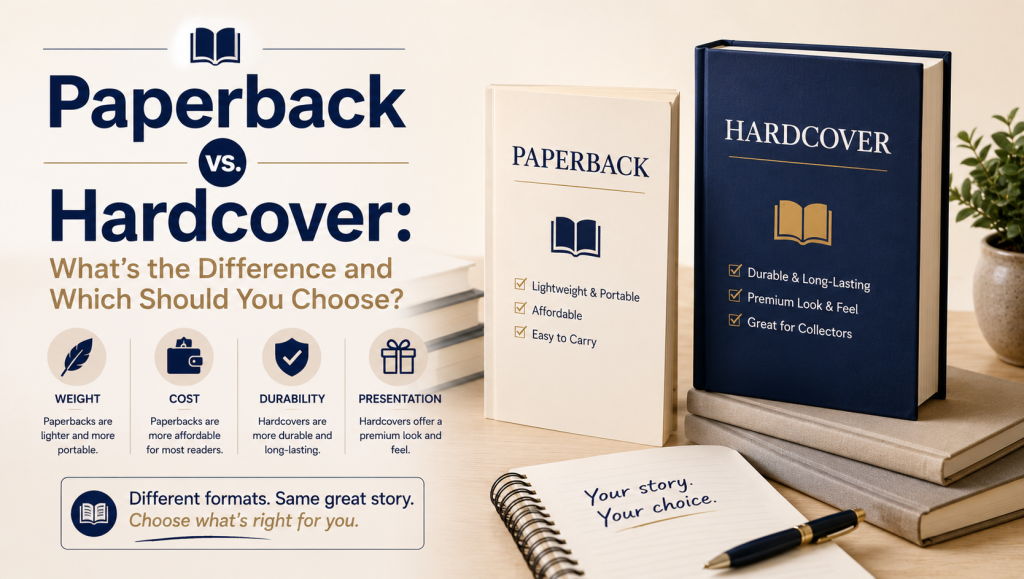
Hardcover Vs Paperback Price: The Cost Breakdown
Here’s why hardcovers cost more (and when they’re worth it):
Hardcovers aren’t just fancy – they’re built differently with:
- Stitched bindings that can handle heavy use
- Sturdy covers are protected by dust jackets
- Thicker paper resists yellowing over time
Publishers often release hardcovers first, knowing super fans will pay extra for that first edition thrill
Paperbacks? They’re all about keeping reading accessible:
- Glued bindings and flexible covers mean lower production costs
- Priced for readers who want more books for their buck
- Perfect for building a big home library without breaking the bank
Just know they’ll show wear faster. - These are the paperbacks of love, meant to be read and re-read.
Durability Showdown: Which Lasts Longer?
A book’s lifespan hinges on its format. Hardcovers are built to endure, with stitched bindings that survive hundreds of readings without spine cracks. Libraries rely on them for this reason, a well-kept hardcover can circulate for 20+ years. Paperbacks, while portable, show wear faster. Their glued spines weaken with repeated openings and cover curl in humid environments.
Durability Tests:
- Bend Test: Paperbacks fold easily (risking spine creases); hardcovers resist.
- Water Damage: Hardcover jackets protect against spills; paperbacks warp.
- Long-Term Storage: Hardcovers resist yellowing better in sunlight.
Reading Experience: Comfort vs. Practicality
The choice between paperback and hardcover goes beyond cost, it fundamentally changes how you interact with a book. Paperbacks are the undisputed champions of convenience. Their lightweight design and flexible spines make them ideal for one-handed reading, whether you’re curled up on a couch or squeezing in a few pages during your commute. The ability to fold the cover back completely reduces wrist strain during long reading sessions.
Hardcovers offer a more luxurious tactile experience but demand compromises. The rigid covers and heavier weight make them awkward to hold for extended periods without a table or bookstand. However, they excel in presentation laying flat when open for easy note-taking, with crisp typography on higher-quality paper that reduces glare.
Key Differences in Use:
- Portability: Paperbacks win for travel; hardcovers add noticeable bag weight.
- Readability: Hardcovers often use larger fonts and wider margins.
- Aesthetics: Hardcover dust jackets create a polished shelf presence.
Pro Tip:
For thick books (500+ pages), seek “trade paperbacks” they split the difference with sturdier glued spines and lighter weight than hardcovers.
Amazon Hardcover vs. Paperback: What Buyers Should Know
Shopping online adds another layer to the paperback vs. hardcover debate. Amazon listings often show both formats side-by-side, but subtle differences impact your purchase:
- Print Quality Variations
Hardcovers on Amazon typically use the same files as physical bookstore editions, meaning consistent paper quality and ink opacity. Paperbacks especially print-on-demand titles may show slight variations in trim size or cover saturation.
- Shipping Considerations
The flexible nature of paperbacks makes them less prone to damage in transit compared to hardcovers, where dust jackets can slip, and corners may dent. However, hardcovers better protect interior pages from moisture during shipping.
- Return Realities
Amazon’s return policies apply equally, but hardcovers are more likely to arrive in resellable condition if you need to exchange them.
- Pro Tip:
Always check the “Other Formats” tab on Amazon, some publishers offer hardcover/paperback bundles at discounted rates.
Niche Uses: Where Each Format Shines
Not all books are created equal, some genres and use cases heavily favor one format over the other. The paperback book vs. hardcover choice gets nuanced with comics. Paperback trade editions (TPBs) prioritize affordability for readers, while hardcover omnibuses cater to collectors with archival-quality paper and sewn signatures.
Comics Hardcover Vs Paperback: What Should You Know
The “comics hardcover vs. paperback” debate inclines on the purpose of a comic:
- Hardcovers (Omnibus/Artist Editions): Ideal for collectors, with sewn bindings that lay flat for full-page art appreciation. Thick paper prevents ink bleed-through.
- Paperbacks (TPBs): Lightweight and affordable for casual readers, though thin pages may show shadows from reverse-side artwork.
For Cookbooks & Reference Guides
- Hardcovers: Spines withstand frequent flipping; lay flat on countertops. Spill-resistant jackets matter in kitchens.
- Paperbacks: Rare except for budget single-subject guides (e.g., “30-Minute Pasta”).
For Travel & Beach Reading
- Paperbacks: Won’t weigh down your bag. Sand won’t ruin a $12 book.
- Hardcover Exception: Slim hardcovers (like Penguin Mini Classics) for luxury readers.
Pro Tip:
Libraries often sell withdrawn hardcovers for less than paperbacks, check Friends of the Library sales for reference books.
The Final Verdict: Hardcover Vs. Paperback Which Is Better?
So, “hardcover vs paperback which is better?” The answer depends on your priorities:
Choose Hardcover If You Value:
- Longevity: For books you’ll revisit for years (family Bibles, signed editions).
- Prestige: Gifts, displayed collections, or supporting favorite authors.
- Reading Experience: Larger text, archival-quality paper, and lay-flat design.
Choose Paperback If You Prefer:
- Affordability: Building a library without breaking the bank.
- Portability: Commuting, traveling, or reading in odd positions.
- Disposability: Books you’ll donate after one read (airport thrillers).
Final Wisdom:
“Hardcovers are investments; paperbacks are partners in adventure.” Mix both use paperbacks to discover new loves, then upgrade favorites to hardcover.
Pro Tip:
Arkham House Publishers helps authors choose the right format for their audience.