
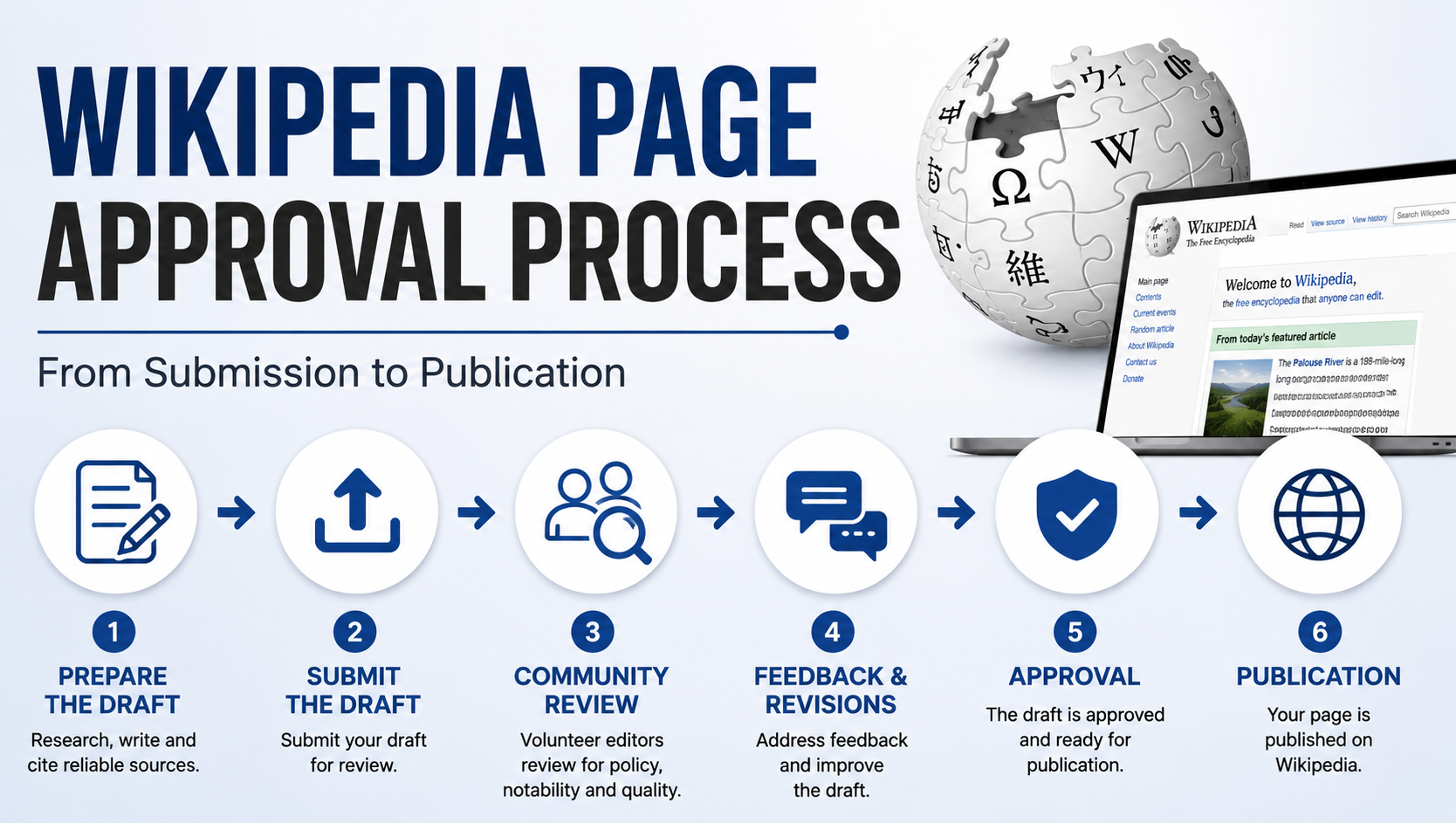
The Wikipedia page approval process involves creating a properly sourced draft, submitting it through the Articles for Creation (AfC) system, and undergoing review by experienced Wikipedia editors. Approval depends on meeting Wikipedia’s standards for notability, reliable sourcing, neutrality, and verifiability.
What Is the Wikipedia Page Approval Process?
The Wikipedia Page Approval Process is the review system used to evaluate whether a new article meets Wikipedia’s content policies and editorial standards before publication.
Contrary to popular belief, publishing a Wikipedia page is not as simple as writing content and clicking “publish.” Every submission is assessed against key policies, including:
- Wikipedia Notability Guidelines
- Verifiability Policy
- Reliable Sources Guidelines
- Neutral Point of View (NPOV)
- Conflict of Interest (COI) Guidelines
If an article fails to meet these standards, it may be declined, rejected, or deleted.
Why Does Wikipedia Review New Articles?
Wikipedia’s goal is to maintain an encyclopedia based on verifiable and independent information.
The review process helps ensure that articles are:
- Factually accurate
- Supported by reliable sources
- Free from promotional language
- Relevant to readers
- Consistent with Wikipedia policies
Without this review system, Wikipedia would be vulnerable to advertising, misinformation, and self-promotion.
How the Wikipedia Articles for Creation (AfC) Process Works
Most new articles are submitted through the Articles for Creation (AfC) process.
Step 1: Create a Draft Article
Before publication, editors typically create a draft in Wikipedia’s draft namespace.
A draft should include:
- An encyclopedic introduction
- Well-organized sections
- Reliable citations
- Neutral language
- Proper formatting
At this stage, the article is not yet visible as a live Wikipedia page.
Step 2: Demonstrate Wikipedia Notability
One of the most important parts of the approval process is proving that the subject is notable.
What Is Wikipedia Notability?
Wikipedia defines notability as receiving significant coverage in reliable, independent secondary sources.
Examples of acceptable sources include:
- Major newspapers
- National magazines
- Academic journals
- Industry publications
- Books from reputable publishers
Sources controlled by the subject generally do not establish notability.
Examples include:
- Company websites
- Personal websites
- Social media profiles
- Press releases
Notability is often the deciding factor in whether a page is approved or declined.
Step 3: Add Reliable Sources and Citations
Every significant statement should be supported by reliable references.
Reliable Sources Wikipedia Typically Accepts
- News articles
- Magazine features
- Academic publications
- Government publications
- Established industry resources
Sources That Frequently Cause Problems
- Self-published content
- Marketing materials
- Sponsored content
- User-generated websites
- Unverified blogs
Strong sourcing increases reviewer confidence and improves approval chances.
Step 4: Follow Wikipedia’s Neutral Point of View Policy
Wikipedia requires articles to be written objectively.
Example of Promotional Language
“ABC Company is a leading and innovative technology provider.”
Neutral Wikipedia Style
“ABC Company is a technology company founded in 2019.”
Editors frequently decline drafts that sound like advertisements or public relations content.
Step 5: Submit the Draft for Review
Once the article is complete, it can be submitted through the Articles for Creation system.
After submission, volunteer Wikipedia reviewers evaluate the article against Wikipedia policies.
The review queue may vary in length depending on reviewer availability and submission volume.
What Happens During Wikipedia Review?
A reviewer examines several key areas.
Wikipedia Notability Assessment
The reviewer determines whether independent sources provide sufficient coverage of the subject.
If notability is not demonstrated, the draft may be declined.
Source Quality Review
Reviewers assess:
- Source independence
- Source reliability
- Source relevance
- Citation quality
Weak or promotional references often lead to rejection.
Neutrality Review
Editors look for:
- Marketing language
- Biased claims
- Excessive praise
- Unsupported statements
Content must remain balanced and factual.
Verifiability Check
Reviewers verify whether information can be independently confirmed using cited sources.
Unsourced claims are frequently removed or questioned.
Formatting and Structure Evaluation
The article should follow standard Wikipedia formatting.
This typically includes:
- Lead section
- Relevant headings
- Inline citations
- References section
- Appropriate categories
Poor formatting may delay approval.
Possible Outcomes of the Wikipedia Approval Process
Approved
If the article meets Wikipedia standards, it is accepted and published as a live Wikipedia article.
The page becomes searchable and accessible to readers.
Declined
A declined article remains in draft form.
The reviewer usually provides feedback outlining issues that need correction.
Common reasons include:
- Insufficient notability
- Weak sources
- Promotional tone
- Missing citations
The article can often be improved and resubmitted.
Rejected
In some cases, the reviewer may determine that the subject clearly does not qualify for a Wikipedia article.
This may result in rejection or deletion recommendations.
How Long Does Wikipedia Approval Take?
There is no guaranteed timeline.
Approval times depend on factors such as:
- Review queue size
- Reviewer availability
- Article quality
- Complexity of the topic
In many cases, reviews take anywhere from a few days to several weeks.
Some drafts may remain in the queue longer during busy periods.
Common Reasons Wikipedia Drafts Are Declined
Failure to Meet Notability Guidelines
This remains the most common reason for declined submissions.
Without significant independent coverage, approval is unlikely.
Too Much Promotional Content
Wikipedia is not a marketing platform.
Sales-focused language often leads to reviewer concerns.
Poor Quality References
Low-quality or self-published sources weaken an article’s credibility.
Copyright Violations
Copying text from websites, biographies, or press materials violates Wikipedia policies.
All content should be original and properly sourced.
Conflict of Interest Concerns
Articles written by people closely connected to the subject may receive additional scrutiny.
Transparency and neutrality are essential.
How to Increase Your Chances of Wikipedia Page Approval
Conduct a Notability Assessment Before Writing
Evaluate whether sufficient independent media coverage exists before creating a draft.
Gather Strong Independent Sources
Focus on high-authority publications rather than self-owned assets.
Write Like an Encyclopedia
Use factual, neutral language throughout the article.
Follow Wikipedia Formatting Standards
A well-structured article is easier for reviewers to assess.
Review Wikipedia Policies Carefully
Understanding policies before submission helps avoid common mistakes.
Conclusion
The Wikipedia Page Approval Process is designed to ensure that published articles meet strict standards for notability, reliable sourcing, neutrality, and verifiability. Understanding how reviewers assess draft submissions can help individuals, businesses, authors, and public figures create stronger articles and improve their chances of successful publication.