

Writing a book is an incredible achievement. But after the manuscript is finished, an equally important step awaits: finding the right publisher. Whether you’re a first-time author or someone who’s already written multiple books, the process of finding a book publisher can seem daunting. It requires research, persistence, and, often, a bit of luck. But with the right approach, you can find a publisher who shares your vision and can help bring your work to a wider audience.
In this guide, we’ll walk you through the essential steps for finding a book publisher. We’ll discuss everything from understanding different types of publishers to submitting your work in the most professional way possible. By the end of this post, you’ll have a clearer idea of what steps to take to get your book published. Let’s dive in!
Step 1: Understanding the Different Types of Publishers
Before you jump into the process of finding a publisher, it’s crucial to understand the different types of publishing options available. Each type of publisher has its own set of benefits and challenges. Knowing the difference can help you narrow down your search and make an informed decision about which path is right for you.
Traditional Publishers
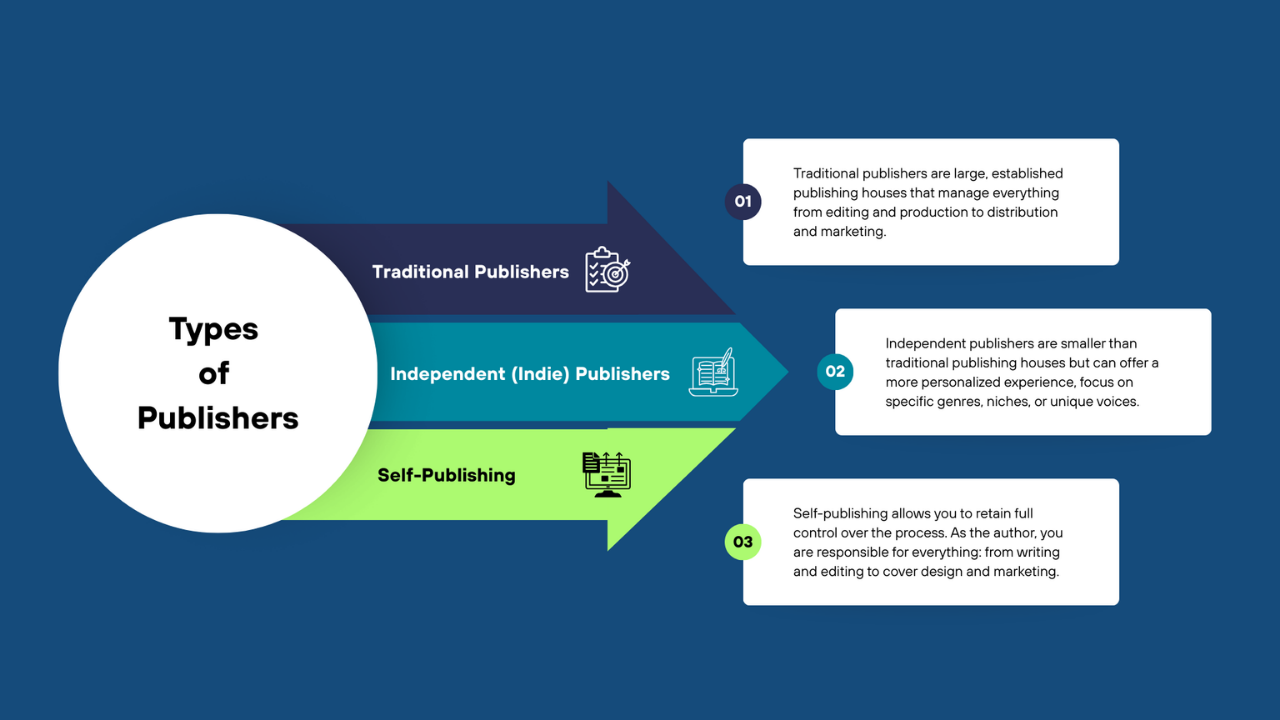
Traditional publishers are large, established publishing houses that manage everything from editing and production to distribution and marketing. These publishers typically require authors to go through literary agents before submitting their work. The process of securing a contract with a traditional publisher can be competitive, as they receive thousands of submissions each year.
Pros of working with traditional publishers:
- Wider distribution: Your book is more likely to be available in bookstores, libraries, and online retailers.
- Professional support: You’ll have a team of editors, designers, and marketers who will help you refine and promote your book.
- Advance payment: Traditional publishers often offer authors an advance on royalties, providing financial support before the book is even published.
However, traditional publishers are selective, and securing a deal can take time. You’ll need to ensure your manuscript meets their standards and that you’re ready for the business side of publishing.
Independent (Indie) Publishers
Independent publishers are smaller than traditional publishing houses but can offer a more personalized experience. These publishers often focus on specific genres, niches, or unique voices, making them more open to new authors who may not fit into mainstream publishing. Arkham House Publishers, for example, specializes in dark fiction, horror, and supernatural genres, giving it a specific focus that appeals to a particular audience.
Pros of working with indie publishers:
- More flexibility: Indie publishers are often more willing to take risks on new or unconventional authors.
- Closer collaboration: You’ll likely have more direct communication with the editorial team and can have more say in the direction of your book.
- Faster publication: The process of getting published with an indie press can sometimes be quicker than with traditional publishers.
One downside is that indie publishers may not have the same distribution channels as larger houses, so your book might not be as widely available. However, indie publishers often focus on building strong communities of readers, so if your book resonates with their audience, it can still achieve great success.
Self-Publishing
Self-publishing allows you to retain full control over the process. As the author, you are responsible for everything: from writing and editing to cover design and marketing. With platforms like Amazon Kindle Direct Publishing (KDP), you can publish your book digitally and in print with ease.
Pros of self-publishing:
- Complete control: You decide everything from the cover design to the release date.
- Higher royalties: You keep a larger percentage of the profits compared to traditional publishing.
- Instant availability: Your book can be published as soon as it’s ready and available for readers worldwide.
The major challenge of self-publishing is the lack of support. You’ll need to handle marketing and promotion on your own, which can be overwhelming without the help of a professional publisher.
Step 2: Research Publishers in Your Genre
Once you understand the different types of publishers, the next step is to research those that specialize in your genre. Not all publishers are open to every type of manuscript, and finding the right fit can increase your chances of success.
For example, Arkham House Publishers is well-known for its focus on supernatural and horror fiction. If your book fits into these genres, submitting to a publisher like Arkham House makes sense because they’re more likely to understand your audience and your genre’s unique needs.
Narrowing Down Your Search
Start by making a list of publishers who focus on the genre or niche your book belongs to. For instance, if you write fantasy, horror, or dark fiction, look for publishers who have a track record in these genres. If you write romance, nonfiction, or children’s books, focus on publishers that specialize in those areas.
You can find potential publishers by:
- Reading books in your genre: Look at the publishers listed in the acknowledgment section of books similar to yours. These are often publishers who specialize in that genre.
- Browsing publishers’ websites: Many publishers provide clear guidelines on what they’re looking for, including submission instructions and the genres they publish.
- Consulting online databases: Websites like the Poets & Writers database, Writer’s Market, and Submittable offer listings of publishers and their submission guidelines.
- Attending book fairs and literary events: Conferences, literary festivals, and book fairs are great opportunities to meet publishers and hear about their submission processes firsthand.
Make sure to take note of each publisher’s submission guidelines. Many publishers have specific requirements for submitting manuscripts, including what formats they accept, the number of pages or word count, and whether they require an agent.
Step 3: Prepare a Professional Submission
A well-prepared submission can make a huge difference in how publishers perceive your work. Publishers receive hundreds or even thousands of submissions, and the first impression matters. Below are the most common elements you’ll need to prepare when submitting your manuscript:
Query Letter
A query letter is a one-page letter that introduces you and your book to the publisher. Think of it as your book’s elevator pitch. Keep it concise and to the point, focusing on:
- A brief introduction to you as the author.
- A short summary of your book (avoid spoilers).
- Why your book is a good fit for the publisher and how it aligns with their catalog.
Remember that the query letter is the first thing the publisher will see, so make it professional, engaging, and free of errors.
Book Proposal
If you’re submitting a nonfiction book, you’ll often need a book proposal. A proposal typically includes:
- A detailed synopsis of your book.
- An explanation of why your book will succeed in the market.
- A competitive analysis (what books are similar to yours and how yours stands out).
- A target audience (who would read your book and why).
For fiction writers, a book proposal may not be necessary, but it’s still important to have a clear and compelling summary of your book.
Manuscript or Sample Chapters
Many publishers will ask for either the full manuscript or just the first few chapters. Make sure your manuscript is polished and ready for submission:
- Ensure the manuscript is formatted according to industry standards (12-point Times New Roman font, double-spaced, and with a title page).
- Edit for spelling, grammar, and flow. Hiring a professional editor to review your work is a good investment.
- Include a table of contents if required, and make sure each chapter begins on a new page.
Cover Letter
Some publishers also require a cover letter along with your submission. This letter should be short and professional, stating your reason for submitting to that particular publisher, and a brief explanation of why your manuscript is a good fit for them.
Step 4: Submit to Multiple Publishers (Strategically)
It’s common to submit your manuscript to multiple publishers simultaneously. However, you’ll need to manage your submissions carefully. Here’s how to approach this step:
Follow Submission Guidelines
Always follow each publisher’s submission guidelines to the letter. Many publishers reject manuscripts outright if the submission doesn’t follow their requirements. Each publisher will provide instructions on how to submit, so pay attention to formatting, page limits, and specific requests.
Track Your Submissions
Keep track of where and when you’ve submitted your manuscript. You don’t want to submit the same manuscript to a publisher who doesn’t accept simultaneous submissions or forget to follow up with one publisher after several months.
You can create a simple spreadsheet to track the following information:
- Publisher name
- Submission date
- Response deadline (if available)
- Status of the submission (pending, rejected, accepted)
Be Patient and Persistent
The submission process can take time. Publishers receive a large volume of manuscripts, and it can take anywhere from a few weeks to several months before you hear back. Be patient and don’t get discouraged by rejections. Rejection is part of the process, and it doesn’t mean your book isn’t good enough. Keep submitting to other publishers and use feedback (if provided) to improve your manuscript.
Step 5: Networking and Building Your Author Platform
In today’s publishing world, networking can be a crucial part of your success. Building relationships with other authors, agents, and industry professionals can help you get noticed by publishers. Consider attending literary conferences, joining writing groups, and engaging on social media to build a community around your work. Networking also extends to building your author platform. Having an active online presence, whether through a blog, social media, or email list, can help you reach readers directly. Publishers are often more likely to consider authors who already have an engaged audience.
Step 6: Handling Offers and Contracts
Once you’ve found a publisher who’s interested in your work, they may offer you a contract. Be sure to read the contract carefully and understand the terms, including the royalty percentage, rights, and responsibilities. If necessary, consult with a literary agent or an attorney who specializes in publishing contracts to make sure you’re getting a fair deal.
Finding the Right Publisher for Your Book
Finding the right publisher is one of the most important steps in your journey as an author. By doing your research, preparing a professional submission, and networking, you’ll increase your chances of finding a publisher who believes in your work. Whether you’re submitting to a large traditional publisher, an indie press like Arkham House Publishers, or choosing to self-publish, the key is persistence and dedication to your craft.
At Arkham House Publishers, we specialize in bringing dark fiction, supernatural, and horror stories to life. If your work fits our focus, we encourage you to check out our submission guidelines and consider submitting your manuscript for review. We’re always looking for new voices and fresh perspectives in the genres we love.